
Revolut Will Cover Costs for Customers Hit by Data Breach
Hey Digital Banking Fanatic!
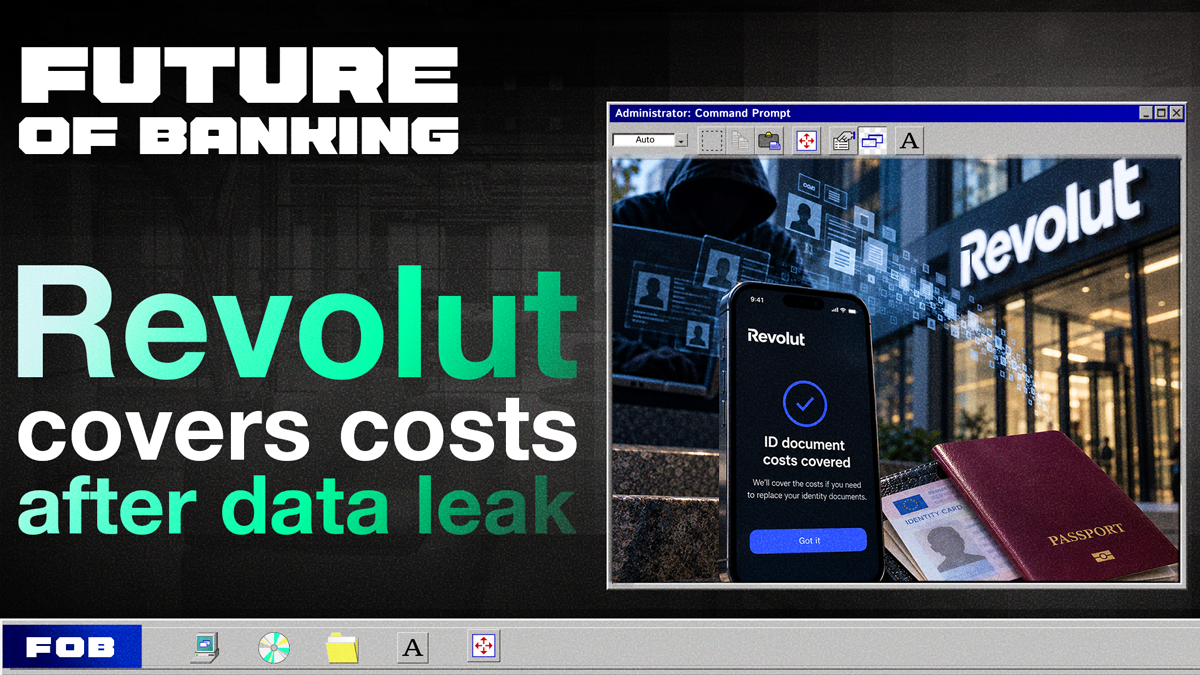
Revolut says it will cover the cost of replacing identity documents for customers affected by its recent data breach.
Béatrice Cossa-Dumurgier, Revolut’s CEO for Western Europe, said the company will pay the associated costs if any of the affected customers need to change their IDs.
The incident involved 680 customers worldwide, after Revolut was tricked into responding to what appeared to be a legitimate request from an Italian government agency. The fake request resulted in customer information being shared, potentially including passport or driving licence copies, verification selfies, addresses, IBANs, account statements and transaction histories, including Bitcoin records.
Revolut says its own systems were not compromised and customer funds were unaffected. But the company is now taking responsibility for the practical consequences, including the cost of replacing documents if customers need to do so.
Cossa-Dumurgier also confirmed that Revolut will not pay any ransom to the attackers.
It’s an unusual outcome for a data incident, but an important one: the cost of a security failure can extend well beyond fixing the breach itself.
Here’s what else is happening in digital banking today👇
See you tomorrow!
Cheers,
INSIGHTS
💡 Tuum puts a familiar question back on the table: “Surely we can build it ourselves.” But when banks compare building from scratch with using a modern core, the conversation isn't only about TCO. Time-to-market matters too - years spent building and maintaining infrastructure can mean years before a new product reaches customers. A modern core can shorten that cycle, giving banks more room to launch, experiment and adapt. Tuum explores why time-to-market deserves a place alongside TCO.

NEWS
🇧🇬 Fibank will integrate cryptocurrencies with Bitpanda Enterprise in 2027. Fibank will become the first Bulgarian bank to offer crypto investing directly inside its mobile app, My Fibank. The service launches in early 2027 and will reach more than a million users alongside their traditional banking products.
🌎 Incognia launches AI Agent Detection for financial institutions. The new capability helps institutions identify agentic activity and assess the risk behind AI initiated actions. Incognia is also adding Web Behavioral Biometrics and an MCP Server that brings its intelligence into AI applications used for fraud investigations.
🌍 Revolut will cover costs for customers hit by a data hack, its Western Europe CEO says. The company sent data on 680 clients to hackers who controlled an Italian government agency email address. Revolut will pay for any identity document changes affected customers need and says it will not pay ransoms.
🇫🇷 Revolut says government agencies were the weak link in a data incident affecting 680 customers. Western Europe CEO Béatrice Cossa-Dumurgier said Revolut itself was not hacked; attackers compromised an Italian government agency’s domain and used it to request customer files. She said 680 customers were affected, including 55 in France, while no funds, access codes or biometric data were compromised.
🌍 Ether.fi moves its core payments infrastructure onto MoonPay's integrated stack. The crypto neobank will use MoonPay for headless ramps, cross chain trading, virtual accounts and crypto deposits. The setup covers how users fund the app, move money inside it and cash out, while users keep control of their keys.
🇬🇧 Monzo launches Monzo Mobile, a mobile plan that rewards customers for staying. Plans start from £8 per month for 10GB of UK data, then get 5% cheaper each year, up to 30% off over time. A Monzo Current Account is required, and the plan has no minimum notice period or exit fees.
🇬🇧 Halifax is shutting down its mobile banking app for good, as Lloyds Banking Group retires the brand. The app leaves app stores on October 31, and Halifax accounts lose digital access from November 1. Existing customers will move to the Lloyds online banking app to manage their accounts.
🇺🇸 DualEntry becomes available through the Silicon Valley Bank Offers marketplace for eligible new customers. The listing provides discounts of up to $20,000 on its AI-native ERP, which automates accounting workflows including financial reporting, accounts payable and receivable, consolidations and multi-entity accounting.
🇬🇧 UK names six banks to lead its first digital gilt issuance in early 2027. Barclays, HSBC, Lloyds, Morgan Stanley, NatWest and RBC Capital Markets will act as joint lead managers for DIGIT. HSBC's Orion platform will host the bond, which will settle onchain within the UK's Digital Securities Sandbox.
🇺🇸 Anchorage Digital buys Routable to add corporate payment rails. The acquisition brings Routable into Anchorage Digital and extends its offering into business payments. According to The Defiant, the deal will add corporate payment rails to Anchorage Digital's existing services.
🇪🇺 BPCE acquires a 7% stake in Banco Sabadell to drive European strategic cooperation. BPCE and Banco Sabadell jointly announced the friendly acquisition of the participation. The 7% holding leaves BPCE as a minority shareholder.
Trusted reach among senior decision-makers in FinTech, Payments & Banking.
👉 Explore Partnership here